
The Limits of Vibe Coding

Vibe coding is amazing. It lets people with no programming experience—and experienced developers too—quickly turn an idea into something they can try out and show others.
If someone had told me five years ago what AI would be able to do today, I wouldn't have believed them. The change has been enormous, and I didn't see it coming. That's why I'm very careful about making predictions. So let's look only at where things stand today.
You decide to build an app yourself. What might go wrong?
A prototype isn't a finished product
It feels almost miraculous. You start describing what you need in plain language, and an app grows before your eyes. Forms, databases, tables. You add buttons, input checks, and calculations. Wonderful.
But eventually something goes wrong. A rule added in one part of the app breaks something elsewhere. A button refuses to work, and the AI gets tangled up trying to fix it, producing ever more complicated solutions.
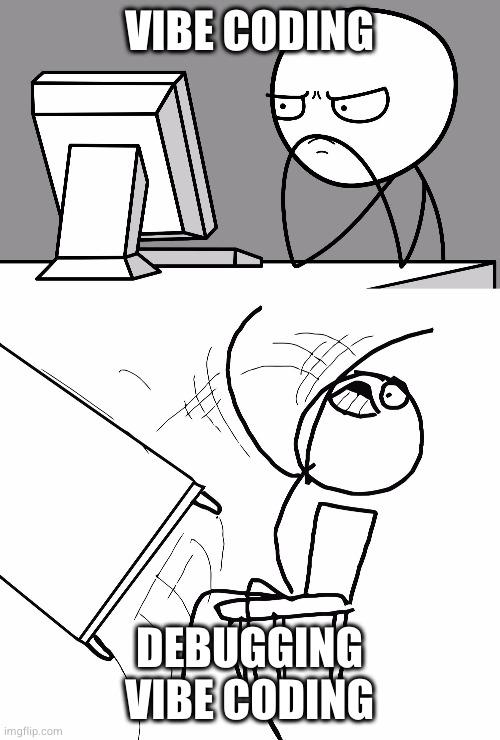
Gradually you realize you're spending time on something you didn't want to do. You want to focus on the work you're actually good at. If that isn't IT, it's rather like trying to repair the office coffee machine yourself.
At this stage, customers often come to a company like NašeApka and say, “Please finish it for us.” And that can be a good starting point. The customer has already shown very clearly what they need. But the prototype often serves better as valuable input for a real app than as an almost-finished foundation.
You don't know what you don't know
AI is brilliant. But the context you give it matters enormously. If you don't have a broad understanding of the field you're working in, you won't know the right terms to guide it.
I recently came across a joke:
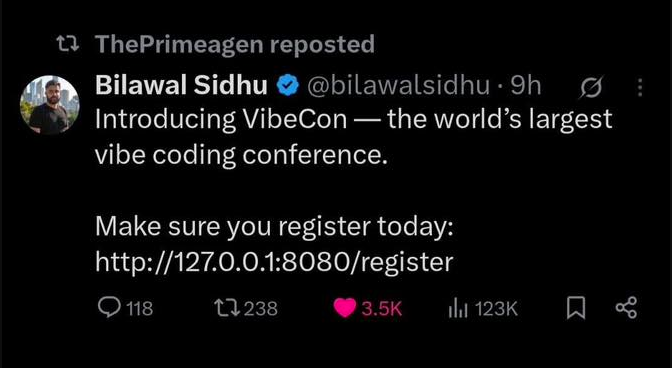
The joke is that when you build a website on your own computer, it uses a purely local address such as 127.0.0.1. No one else can reach it. If you send that address to someone, their device will try to find the website on their own computer. To put a website on the internet, you need a domain, a server, and more.
Most programmers know things like this because they're the basics of the field. But if they try to use AI to solve their own medical problems, they'll hit the same wall as a non-expert in IT.
Of course, you can learn as you go. Every programmer has done that. But do you really have the time?
Security
Security is an extension of the previous point. Removing an appendix may seem straightforward to an experienced surgeon. But there are many other things they must not neglect. Washing their hands, for a start. Knowing where to cut. Disinfecting everything carefully. And doing plenty of other things I know nothing about.
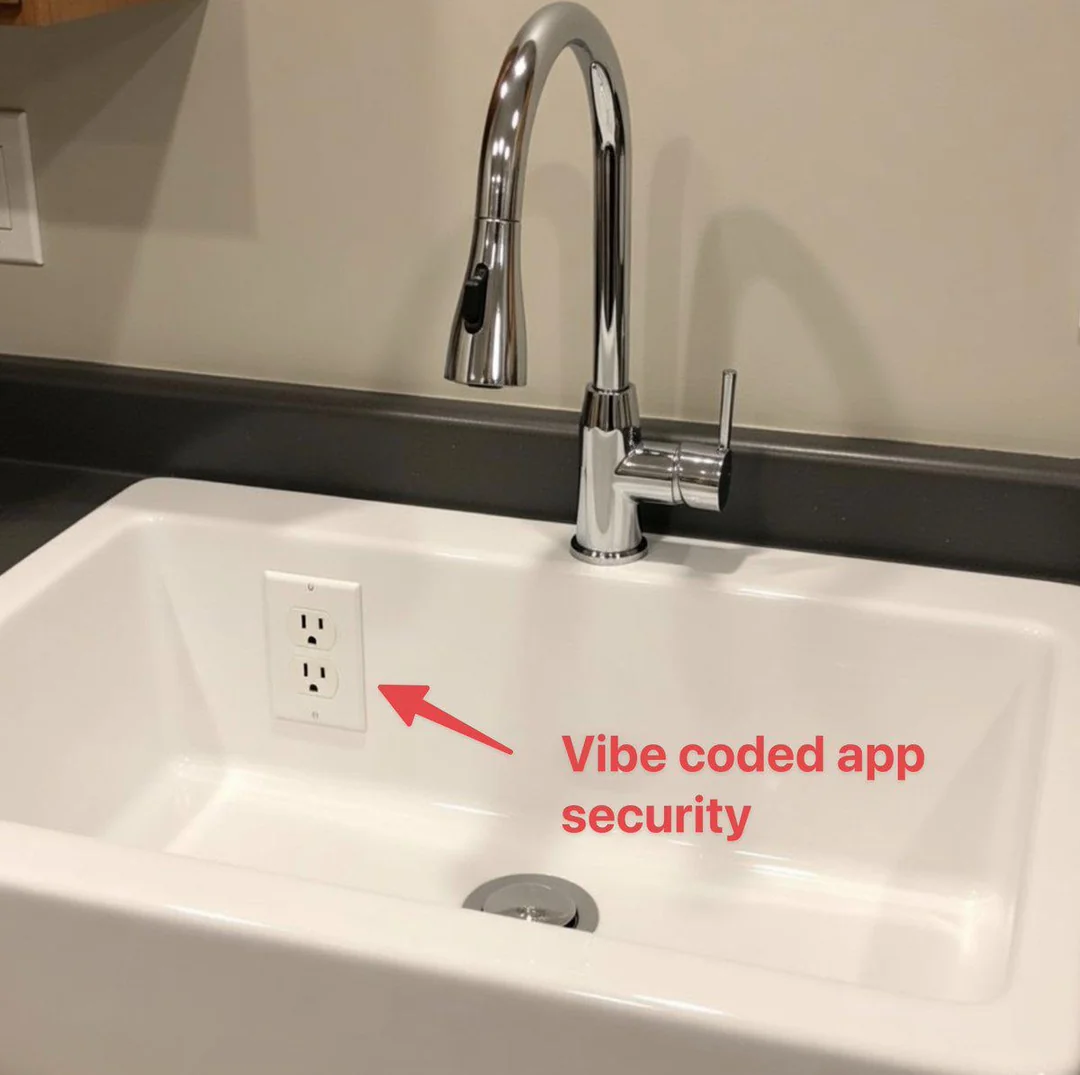
App security is similar. The problem isn't only what you do wrong. It's that without experience, you don't know what to watch out for or what needs protecting.
And the situation is likely to get harder. You may have heard how a model from OpenAI managed to escape an environment built for it by security experts. We're heading into a period when even top security specialists will face difficult problems.
Running an app isn't easy
Building an app is one thing; keeping it running is another. Servers, networks, firewalls. Changes in the app itself, but also in third-party libraries, operating systems, or APIs. And what about backups?

Apps also tend to become more complicated. And AI agents are good at adding complexity. They bring in more and more libraries and readily write code that already exists. The solution keeps growing.
When does vibe coding make sense, and for whom?
I think vibe coding currently makes sense for anyone who has the time and wants to build an app prototype. They can try out how it works, what it should do, and whether it solves the right problem at all. We routinely prepare prototypes as part of our collaboration process.
It's different when an app has to handle important data, serve customers, or support work that a company relies on every day. Then it isn't enough for it to appear to work. It needs to be secure, maintainable, tested, and ready for operation.
So, for now, I don't see vibe coding as a replacement for software development. It is an extraordinarily useful way to turn an idea quickly into something you can try and show to others.
vibe coding, AI, app development
Have you built an app with vibe coding?
If you've used AI to create your own app and want to make it safe and usable, get in touch. We'll look at what you already have and what next step makes sense.
Show us your app